Case study
$1K/month, stuck$10K/month
From Stuck at Scaling to $10K/mo: How Alex Unlocked Growth in His Cleaning Business
Finding the Missing Piece to Finally Scale
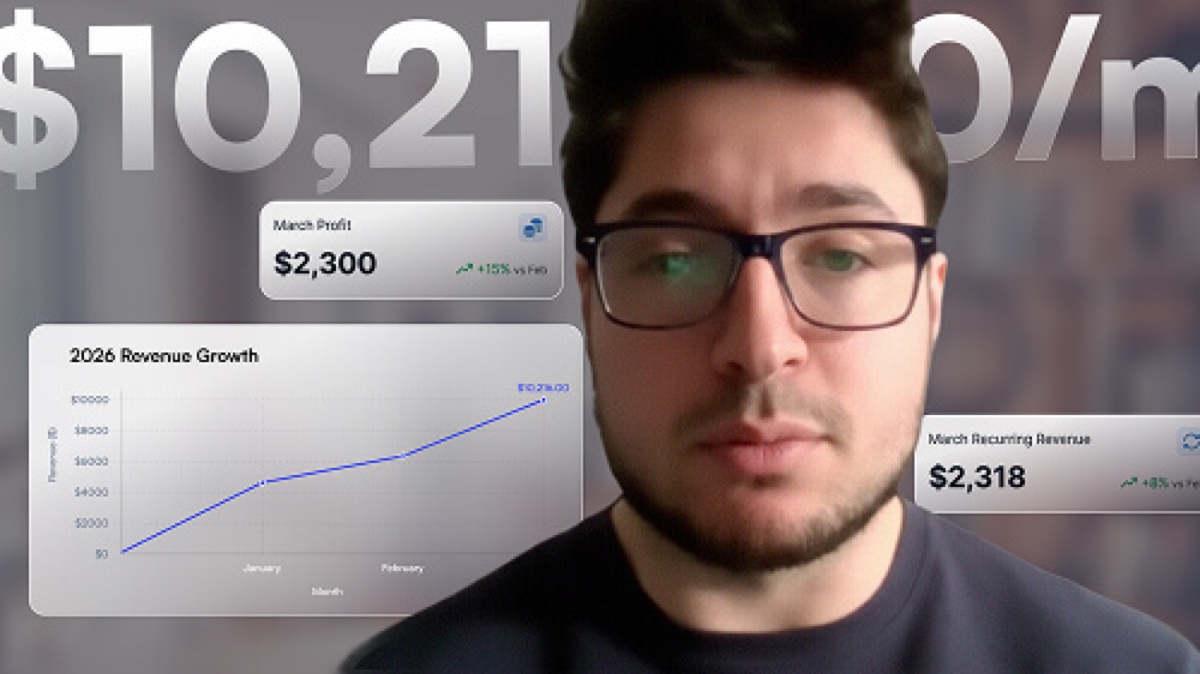
- $10,216March 2026the $10K month
- $1,000per month at join
- 4 hrsper weekusing VAs
That consistency and support translated into real results:
Each month built on the last, with improved marketing, stronger systems, and more predictable revenue. With only 4 hours per week of oversight using VAs, Alex began to see real traction and momentum in his business—proving that scalable systems were finally in place.
Before Build Remote
Alex Milbert, based in San Francisco, CA, had already done what many aspiring entrepreneurs are still trying to achieve—he started and ran his own cleaning company. At the time he joined Build Remote, his business was generating around $1,000 per month, and while he had the foundation in place, something wasn’t clicking when it came to growth. He wasn’t seeing the scalability he knew was possible.
Like many business owners, Alex found himself at a plateau. He had the service, the experience, and the drive—but lacked a clear and effective marketing system to consistently bring in new business and scale beyond his current level.
He knew there had to be a better way to grow, but wasn’t sure what that next step looked like.
The coaching calls were really helpful.
The Turning Point
Determined to figure it out, Alex turned to Google in search of solutions—and that’s when he found Build Remote.
After connecting with the team and learning more about the systems, structure, and tech stack, things started to click. For Alex, it wasn’t just another program—it was a system that actually made sense for where he wanted to go.
He made the decision to join and commit to implementing what he was learning.
Results Snapshot
Once inside, Alex quickly began applying what he learned from the coaching calls and training.
Why Alex Succeeded
Alex’s success didn’t happen by chance—it came from taking action and staying consistent. He committed to learning the system, showed up to coaching calls, and implemented what he was taught. One of the biggest shifts in his business came from taking on commercial cleaning jobs, which played a key role in helping him generate more consistent and scalable revenue.
Instead of guessing his way through growth, he followed a proven framework and leveraged the tools and support available to him. By combining consistency, the right systems, and expanding into commercial work, he was able to turn a stagnant business into one with real momentum.
What’s Next for Alex
Looking ahead, Alex has hit his first major milestone of $10K per month and is focused on holding it. From there, he’s motivated to take on each growth challenge — $30K, $50K, and eventually $100K months.
While $100K months may feel ambitious right now, he’s confident in the systems and momentum he’s building to create a scalable and predictable business. With this foundation in place, Alex is not only continuing to grow his current company, but is also exploring opportunities to expand further within the service industry.
2026 revenue growth
From Pure Bright Cleaners' own booking dashboard.
- $2,300March profit
- $2,318March recurring revenue
- 4 hrsper week, using VAs
| Month | Revenue |
|---|---|
| January 2026 | $4,620.00 |
| February 2026 | $6,336.00 |
| March 2026 | $10,216.00 |
The proof
“The coaching calls were really helpful.”
Supplied by the client
Wins & Testimonials
Screenshot from the private client community
Start Your Story
If you’re like Alex—already in business but stuck trying to scale—this is your opportunity to build something predictable, systemized, and scalable.